Dollhouse Basics

5 Most Important Dollhouse Dimensions: How to Choose the Right Size

Katin Domik three-story wooden dollhouse with furniture — what are the right dollhouse dimensions?

5 Most Important Dollhouse Dimensions: How to Choose the Right Size

When planning a purchase or setting up a play space, parents often drown in dry spec sheets. Search trends around dollhouse dimensions and dollhouse sizes confirm it: measurements are the biggest stumbling block. To make sure the dollhouse doesn't end up as dead weight taking over half the room — and becomes a true play magnet instead — you need to look beyond the outer dimensions and think about the ergonomics of play.

Short video about dollhouse dimensions

One key thing to understand: dollhouse dimensions depend entirely on scale. A full three-story dollhouse in 1:12 scale is no longer just a toy on a shelf — it's a genuine piece of furniture with its own character and space requirements.

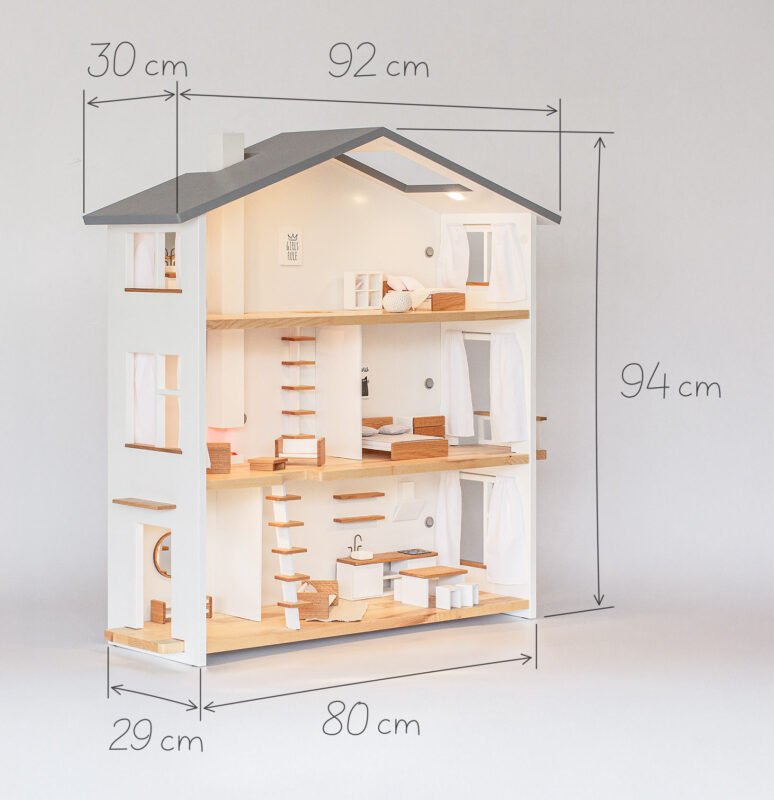
Katin Domik two-story dollhouse dimensions — width, height and depth in centimeters

Overall dimensions in centimeteres of the three-story 1:12 scale dollhouse with lighting — Katin Domik
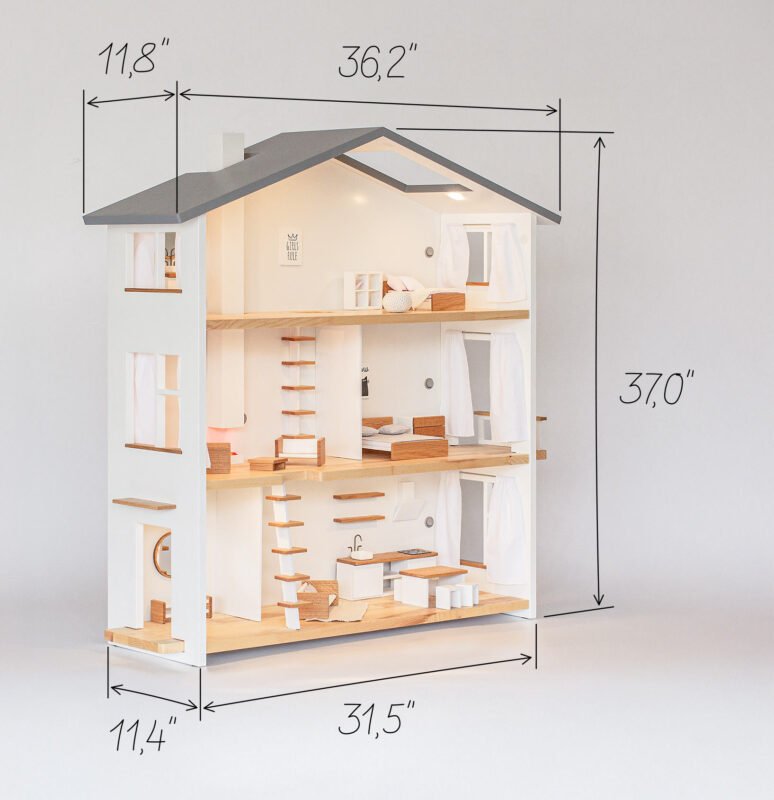
Katin Domik two-story dollhouse dimensions — width, height and depth in inches

Overall dimensions in inches of the three-story 1:12 scale dollhouse with lighting — Katin Domik
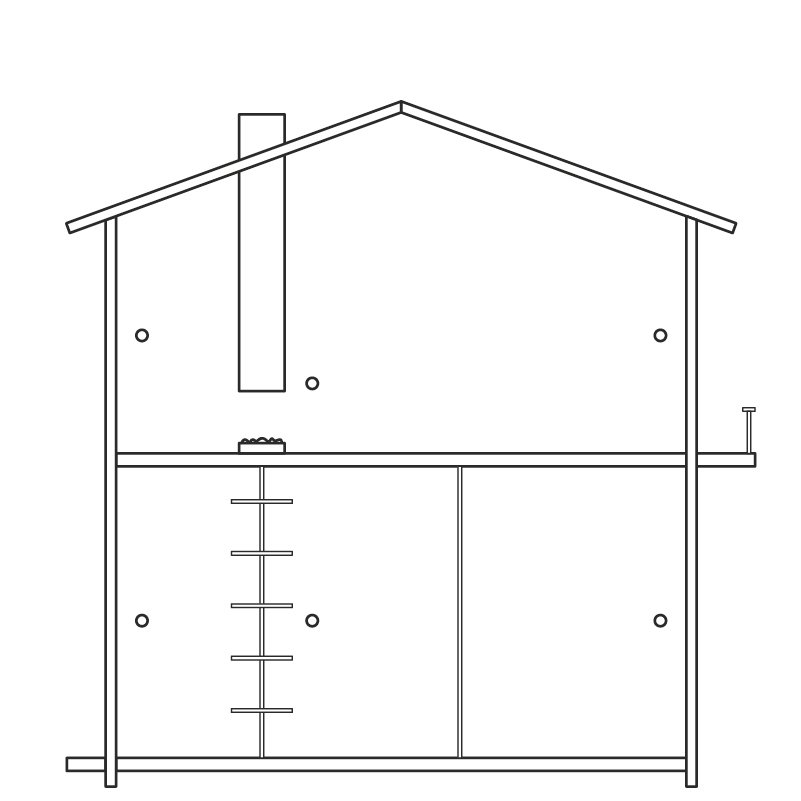
1:6 scale dollhouses are closer in size to a wardrobe. 1:16 and 1:18 dollhouse sizes demand less spatial planning, but offer limited play scenarios — simply put, there isn't much room for varied storytelling inside. 1:24 scale is mostly for collectors and DIY builds, but takes up very little space.
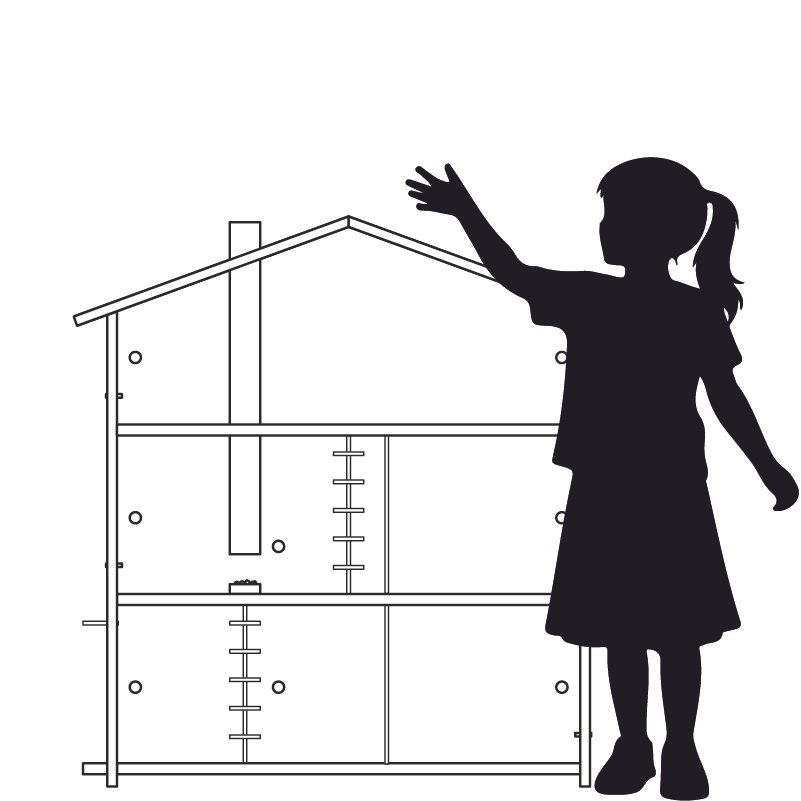
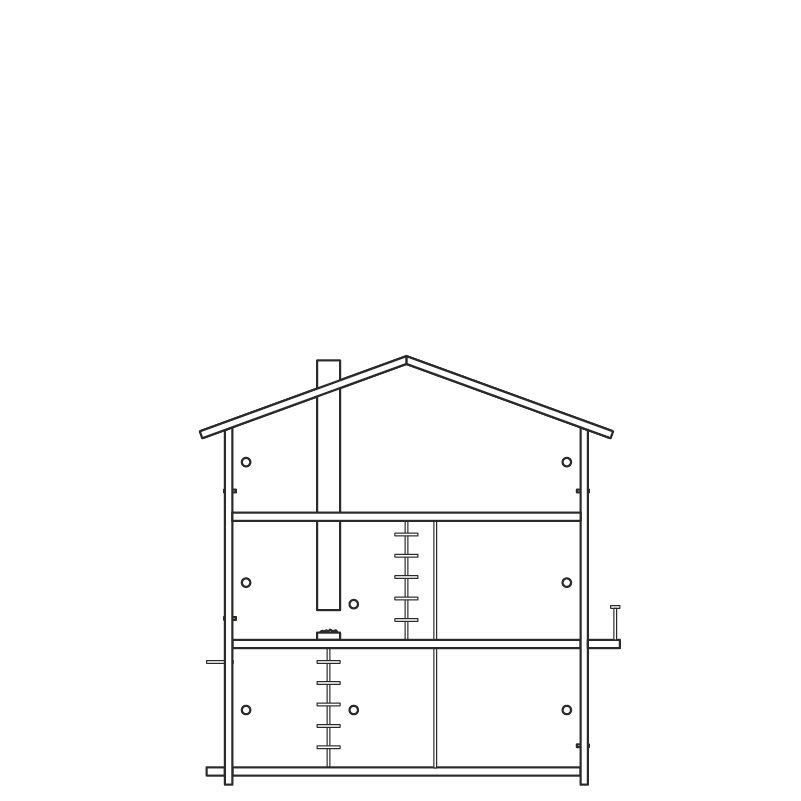
Schematic illustration of a dollhouse in 1:6 scale — size comparison

1:6

Katin Domik three-story dollhouse — actual 1:12 scale size

1:12

Schematic illustration of a dollhouse in 1:16 scale — size comparison

1:16

Schematic illustration of a dollhouse in 1:24 scale — size comparison

1:24

What Katin Domik dollhouses would look like across different scales

1. Dollhouse Width: The First Dimension to Measure

Width is the first measurement to start with. Most dollhouses sit against a wall, so the real question is: do you actually have a spot for it? I know better than anyone how hard it can be to find a free wall in a playroom or child's bedroom.

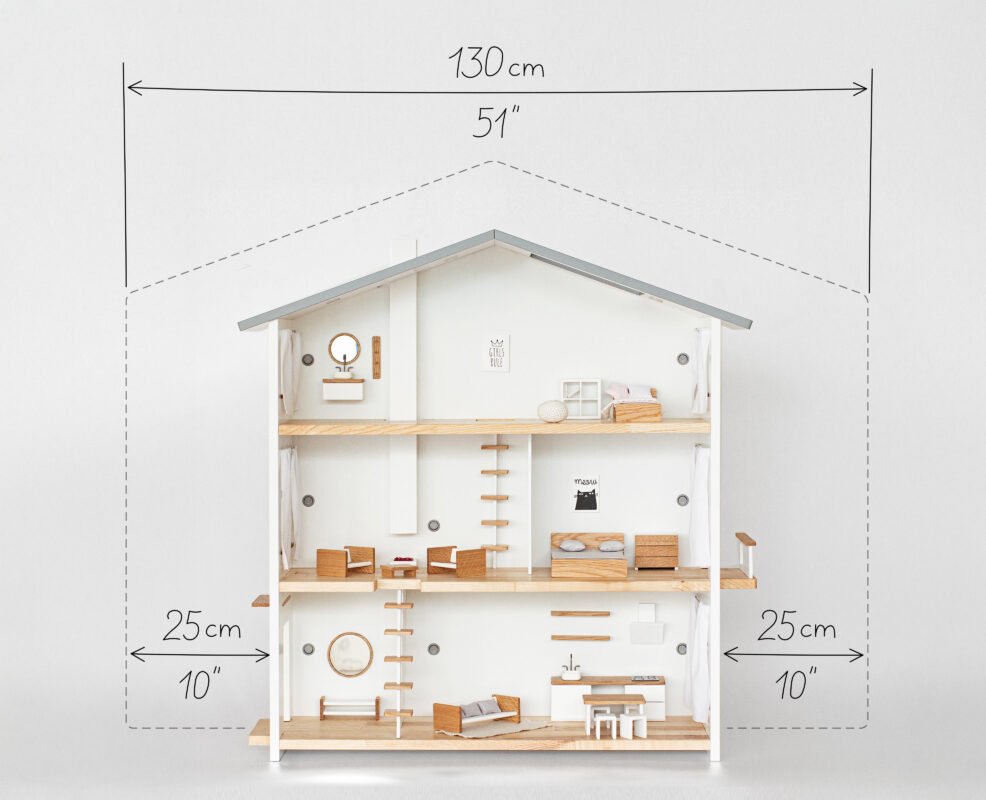
For reference, the width of the three-story Katin Domik is 94 cm (37 in). Play quality also improves when there's open space on either side. Imagine your child peeking in on the residents through a window, or picturing the view a character enjoys stepping out onto the balcony.

Katin Domik three-story dollhouse dimensions — recommended wall space and side clearance

Recommended space layout for the three-story Katin Domik dollhouse
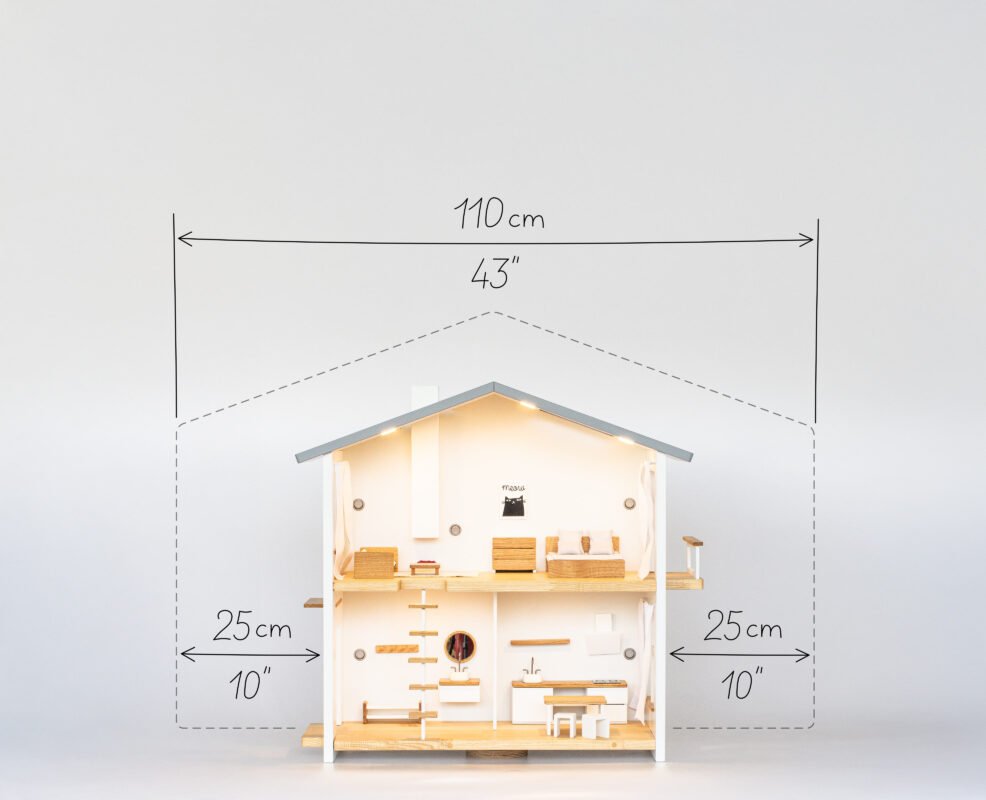
Katin Domik two-story dollhouse dimensions — recommended wall space and side clearance

Recommended space layout for the two-story Katin Domik dollhouse
A good rule of thumb: decide where the dollhouse will live in the playroom first, then choose the model. Not the other way around.

2. Play Zone: The "Invisible" Depth

The most common mistake is accounting only for the physical depth of the dollhouse and forgetting the space in front of it.

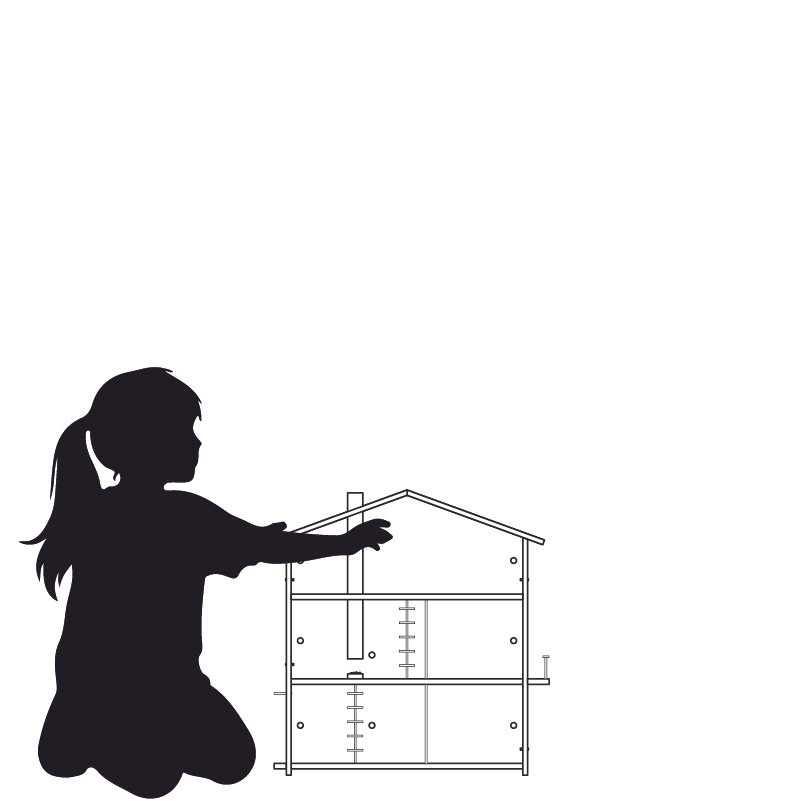
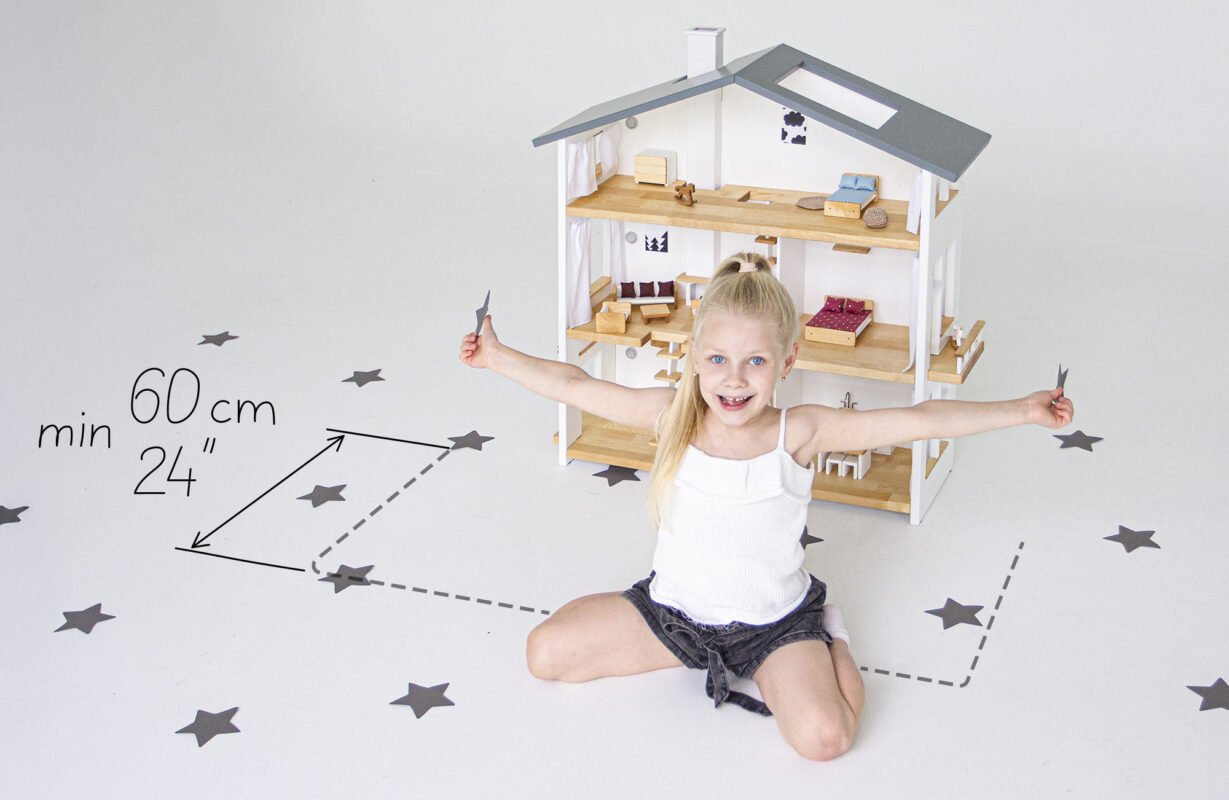
For comfortable play, a child needs room to move: to sit down comfortably, reach the back rooms, arrange furniture, interact with details for long stretches — and sometimes just lie down nearby after an eventful day in the miniature world. Plan for a clear zone in front of the facade: at least 60 cm (24 in), ideally closer to a full meter. A soft rug in that area adds coziness and keeps play sessions longer and more relaxed.

Girl playing in front of Katin Domik three-story dollhouse — play zone depth min 60 cm (24 in) is part of overall dollhouse dimensions to plan for

Recommended floor space in front of the Katin Domik dollhouse
A good rule of thumb: the space in front of the dollhouse matters just as much as the dollhouse itself — and should be at least twice as deep.

3. Ceiling Height: The Most Overlooked Dollhouse Dimension

Ceiling height is a critical — and often overlooked — dollhouse measurement. In dollhouses with low ceilings, children constantly knock things with their elbows trying to reach furniture at the back of a room. With a generous ceiling height, you can arrange furniture anywhere on the floor, even deep inside. It also improves the view: the child can see the whole room, not just the front row.

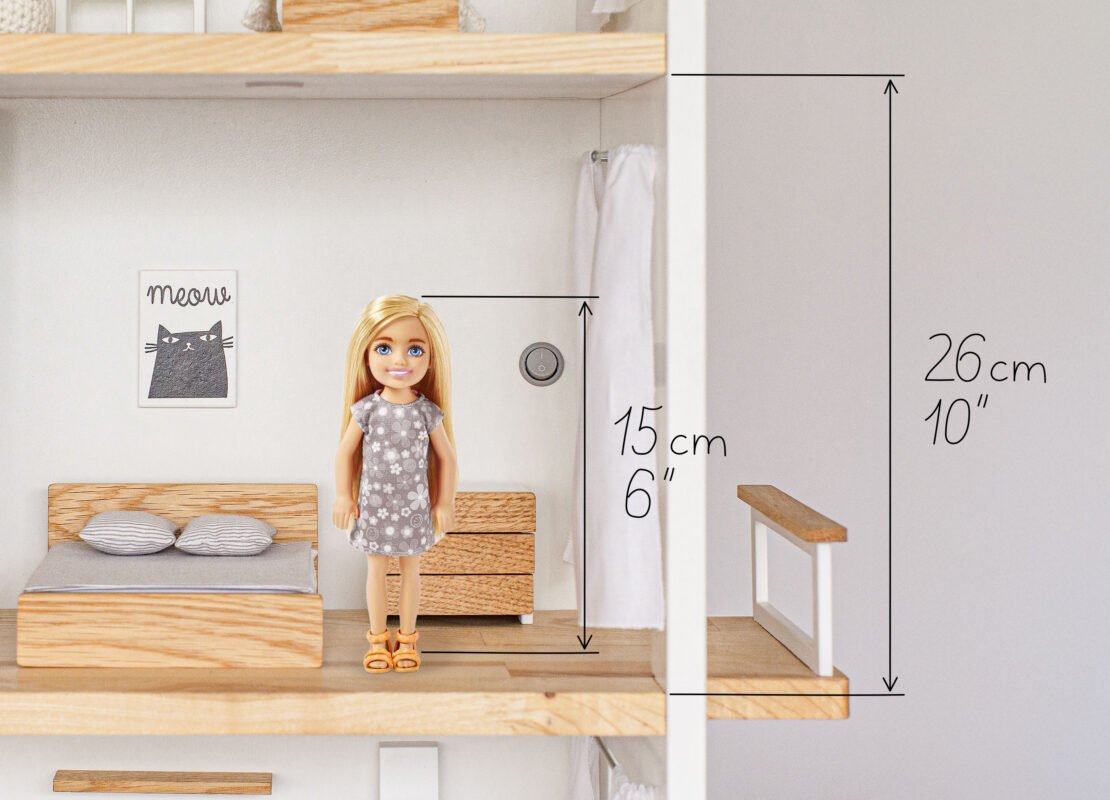
In Katin Domik dollhouses, the floor-to-ceiling height is 26 cm (10.2 in). Translated into real-world dollhouse scale — that's roughly 3.10 m (10.2 ft) of ceiling height. In miniature terms: premium real estate.

This ceiling height gives comfortable clearance to all 1:12 scale dolls, including Sweet Lil Family and Barbie Chelsea figures. And for Sylvanian Families characters, it's practically a palace!

Barbie Chelsea doll (15 cm / 6 in) standing in Katin Domik dollhouse room — ceiling height 26 cm (10 in) leaves plenty of space for play

At 15 cm (6 in) tall, Barbie Chelsea fits comfortably inside — with 11 cm (4 in) of ceiling clearance left to spare. Enough room to live, not just stand.
A good rule of thumb: if you can't fit your hand comfortably into a room, neither can your child's imagination.

4. Room Depth: The Dimension That Defines Play

This works just like real life: the deeper the room, the more space inside. And more space means more possibilities. But here's what really matters: room depth determines how many furniture arrangement scenarios the dollhouse can support. In a shallow room, everything lines up against the back wall. For engaging play, you need enough space not just to arrange furniture freely, but for the residents to actually move around afterward — that's where the real play happens.

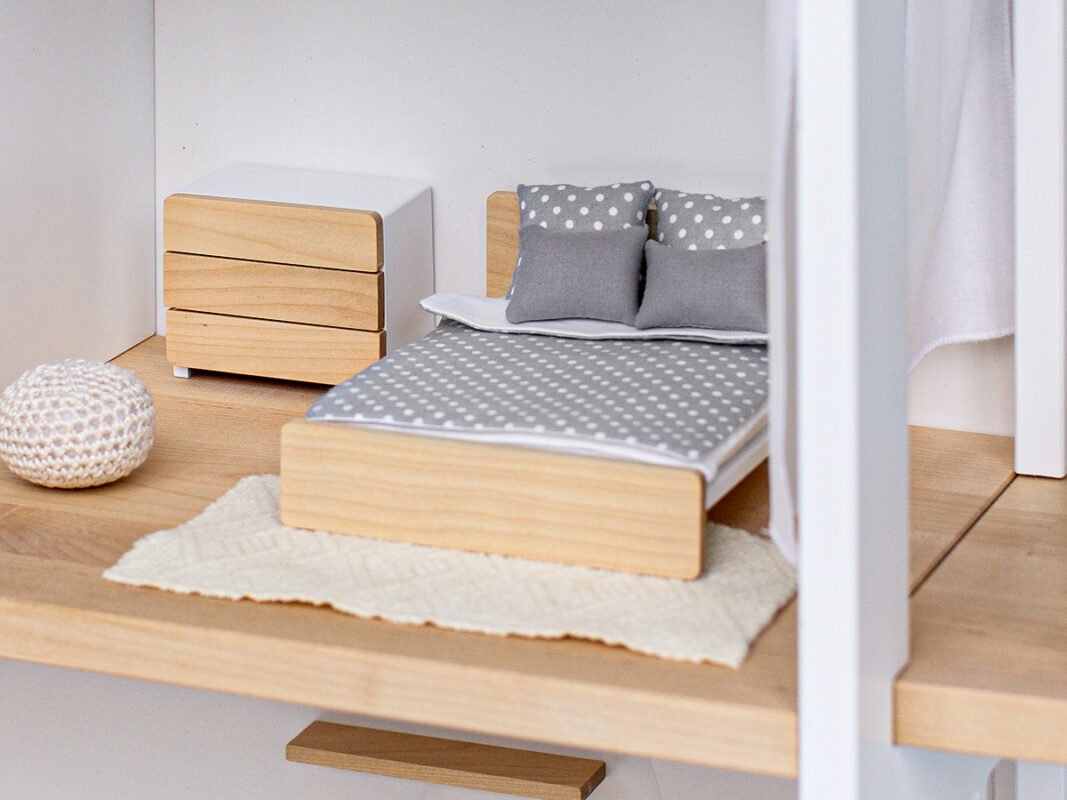
The room depth in Katin Domik is 26 cm (10.2 in). In practice, that means:

Katin Domik dollhouse bedroom — room depth fits a double bed, dresser, and rug with space to spare

A king-size bed fits comfortably — and there's still room for a fluffy rug and whoever will be padding across it in bare feet.
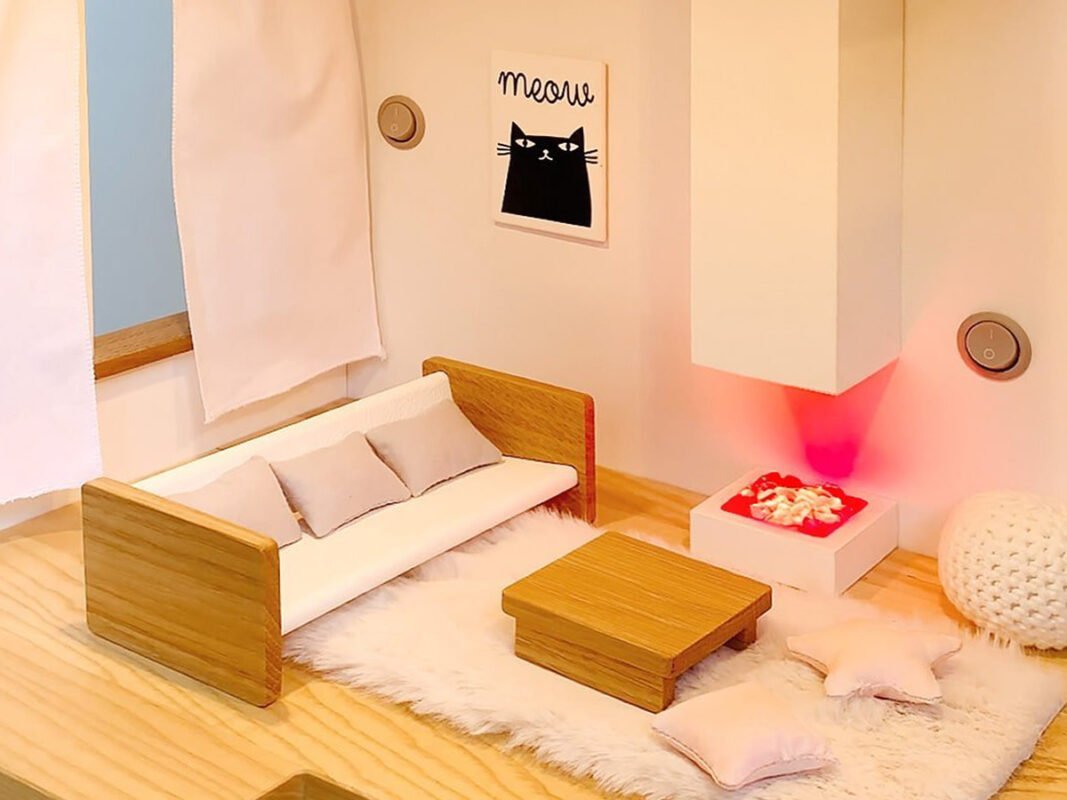
Katin Domik dollhouse living room — room depth allows sofa, coffee table, rug and fireplace with working light

The sofa can go across the room to zone the living area — interior design, dollhouse-style.
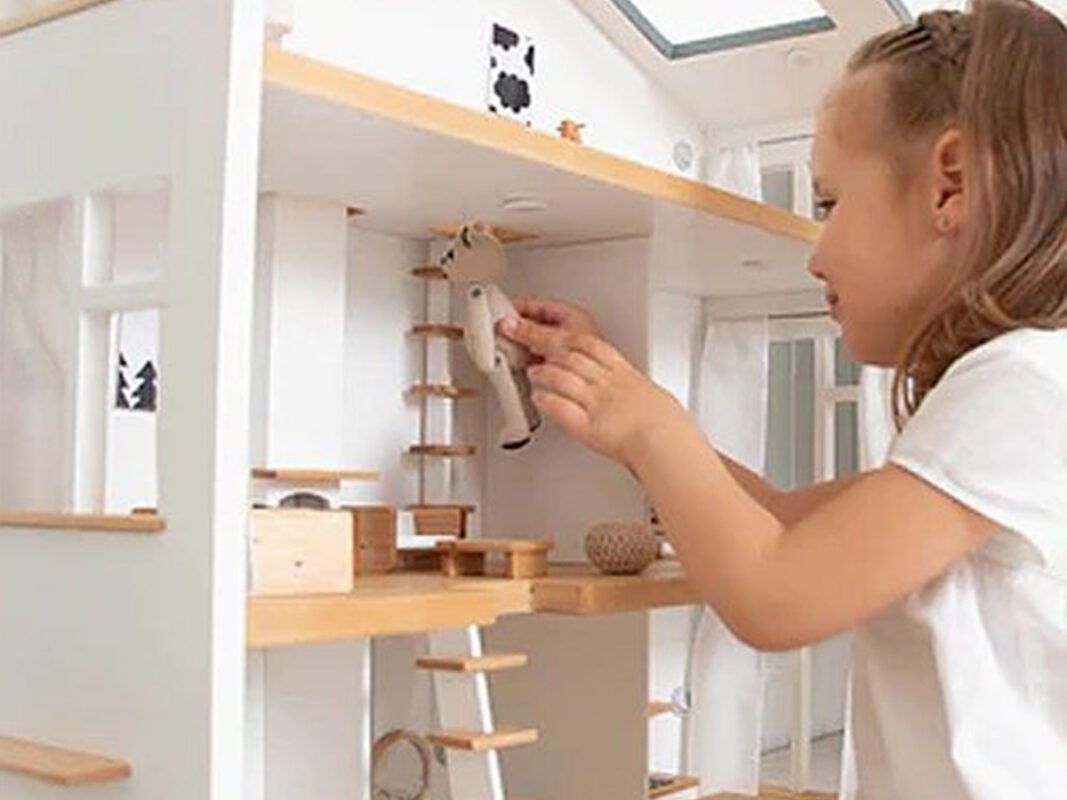
Girl playing inside Katin Domik dollhouse — generous room depth allows easy access to furniture and figures on every floor

Easy to attach accessories to the magnetic wall, and the light switches are always within reach.
A good rule of thumb: a room where furniture can only line up against the back wall isn't a room — it's a corridor. Look for depth that allows at least two "zones" inside.

5. Dollhouse Placement Height

This is the one measurement that never appears in the specs — yet it directly affects how comfortable play actually is. For play that doesn't turn into a workout, the dollhouse needs to be at the right level. The trickiest spots are always the first and top floors.

Placing the dollhouse on the floor is ideal. Children love playing while sitting or lying down, so the ground floor naturally becomes the main stage, and the roof is easy to reach. If you raise the dollhouse, make sure the top floor doesn't end up above the child's eye level. Also check that the surface it sits on is stable. A raised dollhouse is great for storage underneath — just make sure reaching the "attic" doesn't require standing on tiptoe.

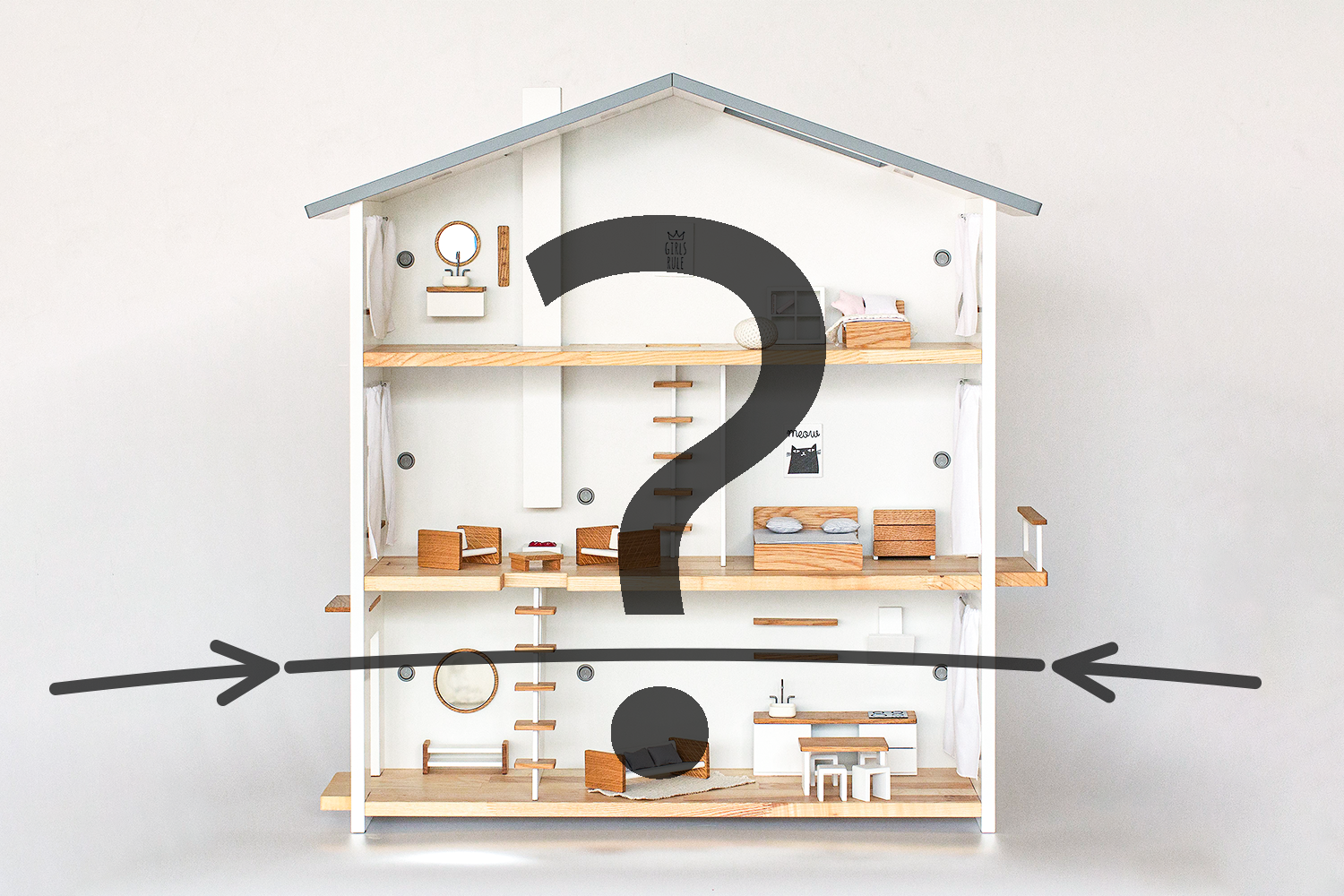
The total height of the three-story Katin Domik is 92 cm (36.2 in), making it perfect for floor placement or a low stand.

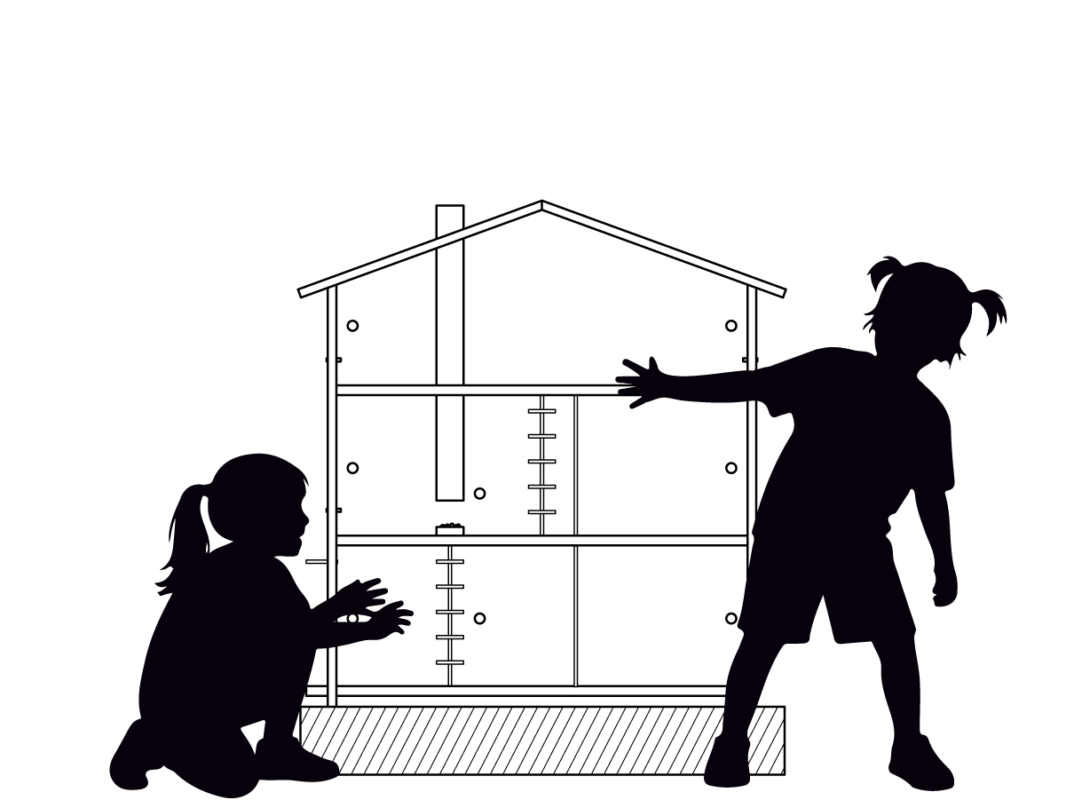
Schematic showing correct dollhouse placement height — children sitting at floor level with easy access to all floors

When the dollhouse sits on the floor or on a low stand, children naturally settle in beside it — and every floor is right where it should be.
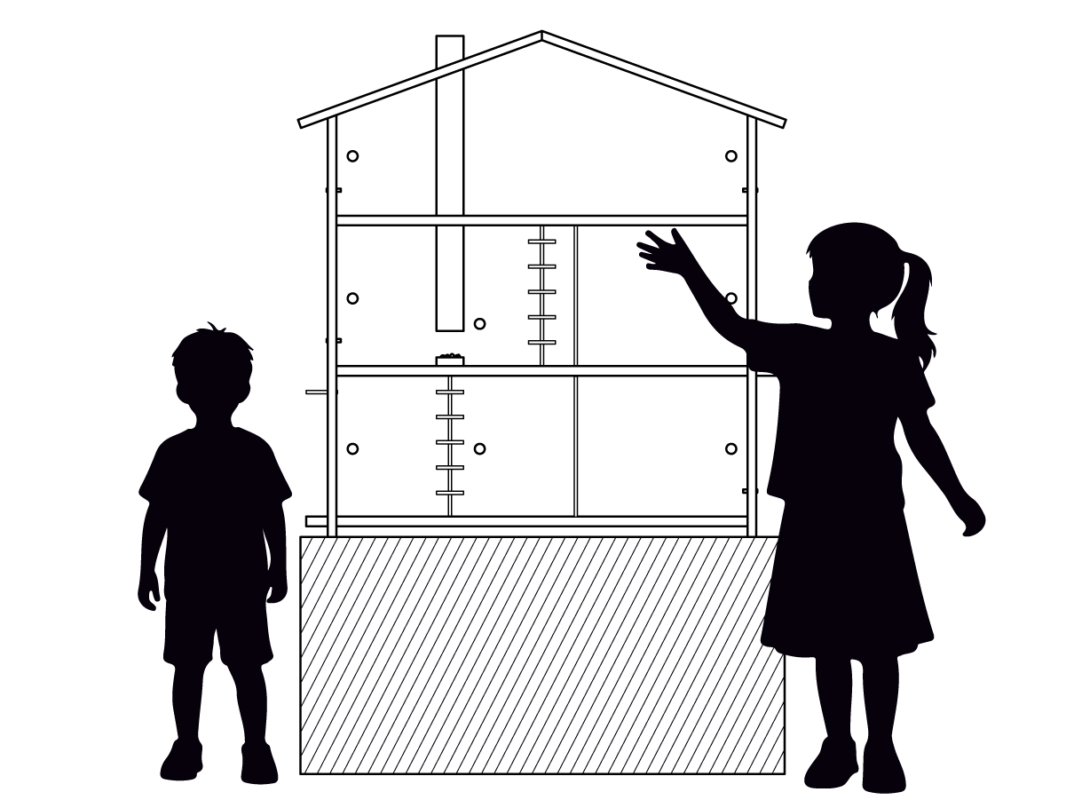
Schematic showing incorrect dollhouse placement height — dollhouse raised too high, top floor above children's eye level

When the dollhouse is raised too high, the top floor becomes a stretch — and the attic turns into a workout.

A good rule of thumb: sit on the floor next to where the dollhouse will stand. If the top floor feels out of reach from there, raise the house — not the child.

The Bottom Line: Comfort in Every Centimeter

When choosing a dollhouse, don't picture the measurements — picture the play. Where will it stand? Will your child have enough room to settle in comfortably beside it? Will they be able to reach their favorite kitchen on the top floor?

The right dollhouse dimensions are the ones that leave enough "breathing room" inside the rooms for little hands and big imaginations — and turn the dollhouse itself from a piece of furniture into a favorite home for the biggest stories in the smallest world.